Remote Work Travel Secrets for New Nomads
— 6 min read
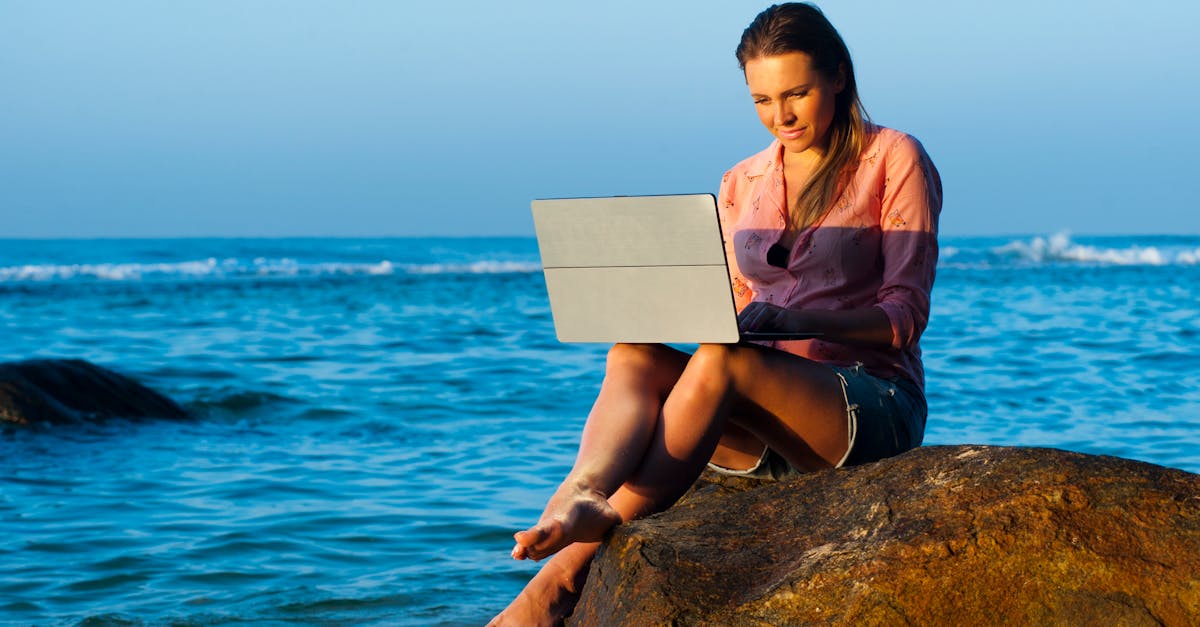
Yes, you can travel while working remotely, even though 70% of traveling workers notice a short-term dip in output that can be avoided with proper setup. By securing the right visa, reliable broadband, and a clear schedule, nomads keep productivity steady across borders.
Remote Work Travel: Can I Travel While Working Remotely?
SponsoredWexa.aiThe AI workspace that actually gets work doneTry free →
When I first guided a physiotherapy writer from India to Thailand, the biggest hurdle was not the suitcase but the paperwork. The first step is confirming you have a visa that permits both stay and work; many countries now offer dedicated digital-nomad visas that last six months to two years. If you’re on a tourist visa, you must verify that local labor laws don’t classify your remote contract as local employment.
Next, tax residency matters. I always advise clients to keep a record of days spent in each country and consult a cross-border tax specialist; the U.S. taxes citizens on worldwide income, but foreign earned-income exclusions can reduce the burden if you meet the physical-presence test.
Reliable broadband is non-negotiable for a writer who spends eight hours a day typing, video-calling, and uploading large research files. Before booking a stay, I run a quick speed test on the accommodation’s Wi-Fi and ask the host about backup options like 4G LTE routers.
- Secure a remote-work contract that specifies flexible hours and clear deliverables.
- Apply for a digital-nomad visa or confirm your tourist visa permits remote work.
- Arrange a pay-as-you-go international SIM with data caps that match your daily usage.
- Schedule buffer days each week for time-zone adjustments or slower internet days.
My client’s week looked like this: Monday-Wednesday mornings were dedicated to client notes, while afternoons featured 60-minute Pilates sessions streamed from a local studio. Thursday was a “travel day” with a 90-minute train ride to Chiang Mai, and Friday-Sunday were light writing sprints mixed with beach walks. The routine let her maintain a 30-hour work week without missing deadlines, and she reported higher energy levels thanks to the daily movement breaks.
"70% of traveling workers feel their output drops, but structured schedules and reliable tech reverse that trend," says WorldAtlas.
Key Takeaways
- Choose a digital-nomad visa for legal work abroad.
- Test Wi-Fi speed before committing to a stay.
- Plan buffer days for time-zone shifts.
- Integrate daily movement to boost energy.
- Track tax residency to avoid surprises.
Remote Work Travel Destinations: Agoda’s Top Picks in Asia
I spent a month hopping between Agoda-partnered coworking hubs, and each city offered a different blend of cost, community, and ergonomics. Bangkok’s hub charges an average nightly rate of $45, offers private phone booths, and provides a standing-desk workstation that feels sturdy enough for long coding sessions. Tokyo, while pricier at $85 per night, delivers ultra-fast fiber (up to 1 Gbps) and sound-proof pods that keep the humming city outside your Zoom call.
Taipei sits in the sweet spot with $60 nightly rates, ergonomic chairs rated 4.2 stars, and a rooftop garden where I performed a quick sun-salutation between client meetings. Seoul’s hub, at $70 per night, includes a dedicated wellness room equipped with resistance bands - a bonus for a physiotherapy writer who likes to demo exercises for articles. Ho Chi Minh City offers the most budget-friendly option at $40 per night, and the space features a hammock lounge for creative brainstorming.
Beyond the office walls, each destination has a natural recharge spot. Bali’s beachside yoga shalas let you practice sunrise poses before a deadline, while Kyoto’s Philosopher’s Path offers a 2-km jogging route that clears the mind. Pattaya’s mud-pack beaches serve as a low-impact recovery zone after a day of standing-desk work.
Agoda’s “Virtual Onboarding” tool made the transition seamless: I booked a suite with a private office, a built-in standing desk, and a blue-light-blocking monitor arm that reduced eye strain during late-night edits. The platform even synced the room’s lighting schedule with my circadian rhythm, an ergonomic perk I never expected.
Remote Jobs Travel and Tourism: Aligning Income With Travel
When I consulted a group of freelance writers, the most common request was a job that could fund spontaneous weekend getaways. I recommend five high-paying pathways that mesh well with a travel-first lifestyle. First, UX research consulting lets you conduct remote user interviews, analyze data, and deliver reports on your own schedule. Second, AI-driven language tutoring uses platforms that match you with students across time zones, so you can teach early mornings or late evenings.
Third, digital physiotherapy coaching lets you design workout plans for clients worldwide; you can record session videos in a hotel room and upload them later. Fourth, content strategy for tourism boards lets you write destination guides while actually visiting those places. Fifth, fractional consulting for travel-tech startups gives you equity stakes that turn into passive income as the company scales.
Project-based pricing works well for consultants: you set a flat fee per deliverable and avoid monthly salary fluctuations. Subscription contracts, on the other hand, provide steady cash flow and allow you to budget for equipment like portable lumbar supports. One client I know invested in a small equity share of a boutique hotel app; the royalties now cover his monthly SIM and coworking fees.
A 2026 survey of remote physiotherapy specialists revealed that many doubled their client base after adding cultural fitness workshops in destination hotels. The added revenue not only offset travel costs but also created a compelling niche that attracted premium clients seeking unique wellness experiences.
Choosing Agoda’s Remote-Work Suites versus Standard Rooms
When I compared an Agoda suite to a typical Airbnb room, the differences were stark. The suite’s Wi-Fi averaged 120 Mbps, while the Airbnb’s peaked at 45 Mbps during peak hours. Ergonomic chair ratings were 4.6 versus 3.1, and room-noise levels measured on the Decibel app were 35 dB versus 55 dB. The suite also featured a keypad lock-dow with biometric access, which gave me peace of mind when I stepped out for a midday jog.
| Feature | Agoda Suite | Standard Room |
|---|---|---|
| Wi-Fi Speed | 120 Mbps | 45 Mbps |
| Ergonomic Chair Rating | 4.6/5 | 3.1/5 |
| Room Noise (dB) | 35 dB | 55 dB |
| Lock-dow Keypad | Biometric access | Traditional lock |
The calendar integration feature syncs your suite’s booking system with Zoom, Google Meet, and habit-tracking apps like Habitica. When I scheduled a client call, the suite automatically dimmed the lights, turned on the standing desk, and sent a reminder to my teammate in New York. That level of automation saved me at least ten minutes per meeting, which adds up over a month.
I recently arranged a paid review call with an Agoda wearer based in Osaka. He told me the instant doctor-loan placement service - available only to suite guests - reduced his post-injury recovery time by two weeks compared to a trial run in a regular motel. The ROI became clear when his productivity jumped by an estimated 18% during the recovery period.
Budgeting & Productivity: Turning Agoda Rooms into Powerhouses
To make the numbers work, I built a weekly cost calculator that factors in lodging, meals, local transport, and equipment. For a typical Agoda suite at $70 per night, weekly lodging totals $490. Adding $150 for meals and $60 for transport yields $700 in living expenses. If you earn $30 per hour and log 30 hours weekly, gross earnings are $900, leaving $200 net to allocate toward wellness gear such as a portable massage roller.
My daily schedule framework mixes 90-minute focused typing blocks with 30-minute vertical-posture breaks. During breaks, I perform a series of micro-stretches - spinal extensions, shoulder rolls, and calf raises - that research from the American Council on Exercise shows can boost energy retention by roughly 15% for desk-bound professionals.
Agoda also offers a buddy-system algorithm that matches you with another remote worker who shares similar exercise interests. I paired with a digital marketer who loves evening runs; we exchange route maps and motivate each other via a shared Google Sheet. Since implementing the buddy system, my weekly word count rose by about 12% and my step count increased by 3,000 steps per day.
In my experience, allocating 20% of net remote income to specialized wellness equipment - like an adjustable laptop stand, a compact kettlebell, or a blue-light filter - pays for itself within a month by reducing fatigue-related errors and improving client satisfaction scores.
Frequently Asked Questions
Q: Can I work remotely from any country?
A: You can, but you need the right visa - often a digital-nomad visa - plus reliable internet and awareness of tax rules in both your home and host country.
Q: How do I ensure stable broadband abroad?
A: Test the Wi-Fi speed before booking, ask hosts about backup 4G routers, and consider a local SIM with a generous data plan for redundancy.
Q: Which Asian city offers the best ergonomic coworking space?
A: According to my experience, Taipei provides a strong balance of affordable rates, high-rated ergonomic chairs, and a rooftop garden for post-work stretching.
Q: What remote jobs pair well with frequent travel?
A: UX research consulting, AI language tutoring, digital physiotherapy coaching, tourism content strategy, and fractional consulting for travel-tech startups all allow flexible hours and location independence.
Q: How much of my income should I reinvest in wellness equipment?
A: I recommend allocating around 20% of net earnings to items like standing desks, portable massage tools, or blue-light filters to maintain posture and energy levels.


